

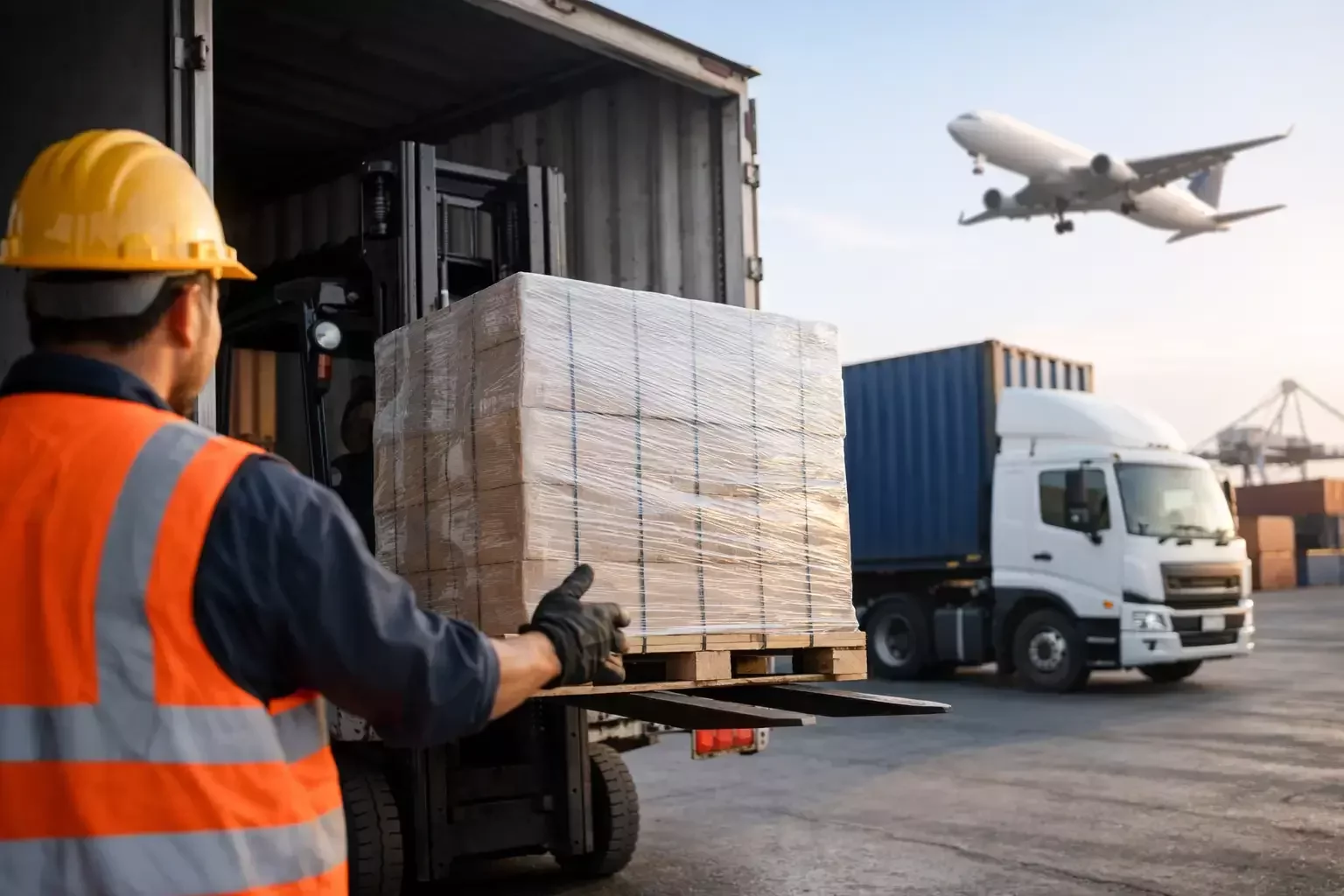
Reduced handling freight transport is about reducing risk, not simply moving freight faster
When a shipment arrives late, damaged or missing part of its load, the underlying cause often began long before the vehicle reached the delivery point.
In many cases, the problem is not driver performance or road conditions.
It is the number of times the freight was handled during the journey.
Reduced handling freight transport is built around a simple operational principle: every unnecessary transfer, cross-dock movement, depot scan or vehicle change creates another opportunity for delay, damage or communication failure.
For businesses moving commercial freight between the UK and mainland Europe, reducing those touchpoints often improves reliability far more effectively than attempting to recover lost time later in the journey.
That is why reduced handling is not simply a transport feature.
It is an operating strategy designed to improve shipment control from collection through to final delivery.
What reduced handling freight transport actually means
Reduced handling freight transport aims to minimise the number of times freight is physically moved between collection and delivery.
Rather than passing through several depots, consolidation hubs or transfer vehicles, the shipment remains under consistent operational control throughout the movement.
This does not necessarily mean zero handling.
Every shipment must still be loaded and unloaded safely.
The objective is to eliminate unnecessary handling that provides little operational value while increasing the likelihood of service disruption.
Fewer touchpoints create greater control
Every transfer creates another dependency.
The freight may wait for unloading.
It may be consolidated with other shipments.
It may be transferred to another trailer or held while paperwork is checked.
Each additional stage increases complexity.
Direct vehicle movements reduce many of those variables by keeping the shipment on one vehicle for as much of the journey as possible.
Why handling matters more than many businesses realise
Handling does not simply affect physical condition.
It influences delivery reliability, paperwork accuracy, communication quality and shipment visibility throughout the supply chain.
For procurement teams and logistics managers, these operational improvements often become visible through fewer claims, fewer service failures and more predictable delivery performance.
Why handling levels affect freight performance
Every movement within the supply chain introduces both cost and operational risk.
Handling requires labour, equipment, warehouse space and time.
It also depends upon cut-off times, depot schedules and the availability of staff.
Even when these activities are performed efficiently, they increase the number of variables affecting delivery.
Damage is the most obvious consequence.
Precision engineering equipment, medical devices, electronics, laboratory instruments and exhibition materials all become more vulnerable when repeatedly moved by forklifts or pallet trucks.
However, physical damage is only one consideration.
Additional handling also increases the likelihood of:
- Misrouted freight
- Detached paperwork
- Incorrect pallet identification
- Missed loading deadlines
- Delayed departures
- Communication errors
For cross-border freight, these operational issues become even more significant because customs documentation and shipment data must remain aligned throughout the movement.
Where reduced handling delivers the greatest commercial value
Not every shipment requires dedicated transport.
Many standard commercial consignments move successfully through shared freight networks every day.
Reduced handling becomes particularly valuable where the commercial consequences of disruption are high.
Time-critical freight
Urgent production components, replacement machinery and engineering spares often require direct routing because every additional transfer increases the possibility of delay.
Businesses moving time-critical freight across Europe frequently prioritise operational certainty over the lowest transport rate.
Fragile and sensitive freight
Reduced handling is equally valuable for shipments that are difficult to replace or vulnerable to movement.
Businesses transporting fragile freight across Europe often find that keeping the shipment on one vehicle significantly reduces the risk of damage.
Cross-border UK–Europe movements
International road freight introduces customs formalities, border processes and delivery commitments that all depend upon accurate planning.
Reducing handling simplifies those movements by reducing the number of operational stages where delays can develop.
Dedicated vehicles and direct routing
One of the most effective ways to reduce handling is through dedicated vehicle allocation.
Rather than entering a wider consolidation network, the shipment remains on the same vehicle from collection through to delivery wherever operationally possible.
This improves:
- Route control
- Communication
- Shipment visibility
- Chain of custody
- Delivery predictability
Smaller urgent consignments often move most effectively using dedicated vans.
Larger commercial shipments may benefit from dedicated lorries or Full Lorry Load (FTL) transport across Europe, depending on their size and operational requirements.
Ultimately, the objective is not simply to provide a dedicated vehicle.
It is to design the transport plan around the shipment rather than forcing the shipment into a standard network model.
Reduced handling still depends on good planning
Direct transport is not simply a vehicle travelling from A to B.
Successful reduced handling begins before collection.
Effective planning includes confirming:
- Freight dimensions
- Weight
- Packaging
- Loading methods
- Delivery restrictions
- Site access
- Booking requirements
- Customs documentation
- Collection readiness
For UK–Europe movements, customs-ready European transport is equally important.
Even the most direct movement cannot compensate for incomplete documentation or poorly prepared customs information.
Reduced handling and effective customs planning work together to produce more reliable cross-border transport.
Cost versus operational control
Shared transport networks remain an excellent solution for many routine commercial shipments.
By consolidating multiple consignments, groupage reduces transport costs while making efficient use of available vehicle capacity.
However, lower transport cost does not always mean lower commercial cost.
Production downtime, customer penalties, emergency replacement shipments and missed project deadlines frequently outweigh any saving achieved on the transport invoice.
Businesses comparing dedicated transport and groupage should therefore consider the wider operational consequences rather than comparing freight rates alone.
For commercially important freight, greater control often represents better long-term value.
Choosing the right transport partner
Reduced handling depends upon more than vehicle availability.
It depends upon planning discipline.
A suitable transport partner should be able to:
- Assess whether reduced handling is appropriate.
- Recommend the correct vehicle.
- Coordinate customs requirements.
- Manage collection and delivery schedules.
- Provide meaningful shipment updates.
- Respond quickly when circumstances change.
These capabilities become particularly valuable where freight is urgent, sensitive or commercially significant.
Operational responsiveness is what turns reduced handling from a marketing phrase into a practical transport solution.
Conclusion
Reduced handling freight transport is not about eliminating every movement.
It is about eliminating unnecessary ones.
Every avoided transfer, depot stop or vehicle change removes another opportunity for delay, damage or communication failure.
For manufacturers, distributors and freight forwarders moving goods between the UK and mainland Europe, that additional control often proves more valuable than marginal savings on transport cost alone.
When shipments remain on the right vehicle, follow a well-planned route and avoid unnecessary handling throughout the journey, businesses gain more than improved delivery performance.
They gain greater confidence that their freight will arrive exactly as intended.
Need a transport solution that reduces unnecessary handling?
Our experienced European transport team plans dedicated road freight around the needs of your shipment, helping reduce handling, improve visibility and protect commercially important deliveries across the UK and Europe.