

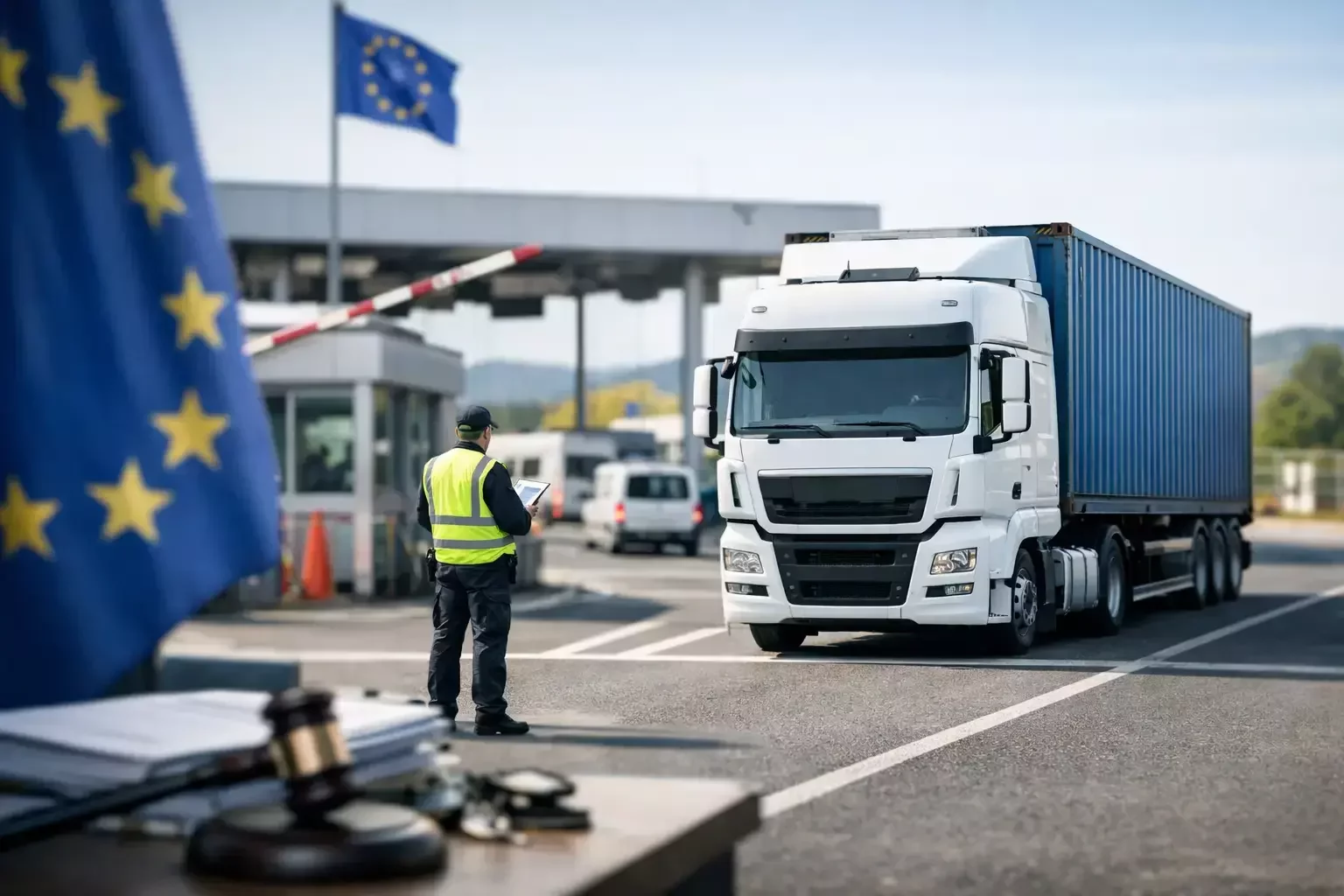
A vehicle can leave the loading bay on time, follow the correct route and still spend half a day waiting at the border if the documentation is incomplete or inaccurate.
That is why customs-ready European transport is not simply a transport issue. It is a planning issue, a compliance issue and, for many businesses, a customer service issue as well.
Since Brexit, road freight between the UK and mainland Europe has become far less forgiving. Missing commodity information, incomplete invoices or uncertainty over who is acting as importer or exporter of record can stop an otherwise well-planned shipment before it reaches its destination.
For manufacturers, distributors, procurement teams and freight forwarders, the consequences extend far beyond one delayed delivery. Border disruption can affect production schedules, installation programmes, warehouse planning, inventory availability and customer commitments throughout the wider supply chain.
Businesses that consistently achieve reliable cross-border deliveries rarely rely on luck. They build customs preparation into the transport plan from the very beginning.
What customs-ready European transport actually means
Customs-ready European transport means the shipment is fully prepared to cross the border before the vehicle begins its journey.
That preparation includes accurate commercial documentation, complete shipment data, confirmed customs responsibilities and a transport plan that supports the customs process rather than treating it as a separate activity.
Cross-border road freight only works efficiently when transport planning and customs planning operate together.
Preparing the shipment before departure
Every movement is different, but customs-ready transport normally requires confirmation of:
- Commercial invoice details
- Commodity codes
- Goods descriptions
- Package quantities
- Gross and net weights
- Customs values
- Importer and exporter details
- Collection instructions
- Delivery requirements
- Any special handling information
Confirming these details before collection significantly reduces the likelihood of avoidable delays later in the journey.
Transport planning and customs planning must work together
Businesses sometimes treat transport booking and customs preparation as two independent tasks.
In practice, they are closely connected.
A vehicle cannot deliver on time if the customs entry has not been completed.
Equally, customs documentation prepared without considering collection times, border crossings or delivery commitments can still create unnecessary delays.
For businesses using Dedicated European Transport, combining transport planning with customs preparation creates a far more controlled cross-border movement.
Why border delays usually begin before the vehicle reaches the border
When freight is stopped at the border, the root cause is often much earlier in the process.
The problem may be:
- An incomplete commercial invoice
- Incorrect commodity codes
- Missing customs references
- Inconsistent shipment information
- Goods collected before documentation was ready
- Delivery instructions that do not match customs declarations
These issues are rarely caused by the driver arriving at the frontier.
They originate during planning.
That is why experienced transport providers ask detailed operational questions before allocating a vehicle.
Understanding who is responsible for customs clearance, when documents will be available and whether both trading parties are prepared is just as important as knowing the collection postcode.
Common causes of customs delays
Although every shipment is different, the same problems appear repeatedly across UK–Europe road freight.
Incorrect commercial documentation
Even small discrepancies between invoices, packing lists and customs declarations can trigger delays.
Incorrect values, incomplete descriptions or inconsistent shipment quantities may require clarification before the goods are allowed to proceed.
Incomplete customs information
Border authorities cannot process information that has not been supplied.
Missing commodity codes, incomplete importer details or unclear Incoterms frequently delay shipments that are otherwise ready to travel.
Confirming responsibilities before collection helps avoid these issues becoming problems at the border.
Poor transport planning
Sometimes the paperwork is correct but the transport plan is not.
Vehicles may arrive before customs entries have been submitted or before receiving sites are prepared to accept delivery.
Customs-ready transport means aligning documentation, collection timing and delivery planning so that every stage supports the next.
The operational value of dedicated transport
Dedicated vehicle movements simplify customs coordination because fewer variables need to be managed.
When one shipment remains on one vehicle from collection through to delivery, communication becomes clearer and documentation remains linked to the same movement throughout the journey.
There are fewer loading events, fewer transfer points and fewer opportunities for paperwork and freight to become separated.
For businesses already moving fragile freight across Europe, this reduction in handling also helps reduce the operational risks associated with sensitive commercial cargo.
Dedicated transport does not eliminate customs requirements.
It does, however, provide transport planners with greater flexibility to confirm documentation before departure, adjust collection times if required and maintain clear communication throughout the movement.
Customs-ready transport for urgent freight
Urgent freight places additional pressure on every part of the supply chain.
The shipment may need to move immediately, but customs legislation does not become more flexible simply because delivery is time-critical.
In many cases, urgency actually exposes weaknesses more quickly because there is less opportunity to correct documentation after booking.
Successful urgent transport therefore depends upon disciplined preparation rather than rushed decision-making.
Commercial paperwork should be confirmed before departure, customs responsibilities agreed and vehicle selection based upon both urgency and shipment profile.
Businesses managing time-critical freight across Europe often find that investing additional time before departure prevents much longer delays later at the border.
What businesses should prepare before booking transport
Experienced transport providers will identify potential issues, but successful customs-ready movements still depend upon accurate information from the shipper.
Before booking transport, businesses should normally have available:
- Collection and delivery addresses
- Commodity information
- Invoice values
- Package quantities
- Shipment weights
- Customs references where applicable
- Importer and exporter details
- Delivery booking requirements
- Site restrictions
- Handling instructions
Providing complete information allows the transport plan to be built around the shipment rather than corrected during transit.
Choosing the right transport solution
Different shipments require different transport models.
The objective should always be to balance cost, operational control and customs readiness.
Dedicated European vans
Dedicated vans are particularly effective for smaller urgent consignments where direct routing and minimal handling reduce both transit risk and customs complexity.
Our guide to Dedicated European Transport explains how dedicated vehicle allocation improves operational control throughout cross-border movements.
Dedicated European lorries
Larger commercial consignments often benefit from dedicated lorry movements where the shipment remains securely positioned throughout the journey.
Businesses moving larger loads can also learn more about Full Lorry Load (FTL) transport across Europe, including when allocating an entire vehicle provides the greatest commercial advantage.
Express road freight
Where a full vehicle is unnecessary but timing remains important, carefully planned express road freight can provide an effective balance between speed and operational efficiency.
The correct solution depends upon the shipment rather than applying the same service model to every movement.
Communication is part of customs control
Cross-border freight rarely fails because of one dramatic event.
More often, small issues remain unnoticed until they become larger operational problems.
A customs query, loading delay or document amendment can normally be managed successfully if it is identified and communicated early.
That is why communication should be viewed as part of customs control rather than an additional customer service feature.
Procurement teams, logistics managers and freight forwarders all rely on accurate milestone updates to coordinate production schedules, warehouse resources and customer commitments.
Providing proactive updates allows businesses to respond before minor issues become costly disruptions.
Conclusion
Customs-ready European transport is not defined by how quickly a vehicle reaches the border.
It is defined by whether the shipment can pass through it without unnecessary intervention.
When transport planning, customs documentation and communication are aligned before departure, businesses gain something more valuable than speed.
They gain predictability.
For manufacturers, distributors, importers and freight forwarders moving goods between the UK and mainland Europe, that predictability reduces operational risk, protects delivery commitments and strengthens the wider supply chain.
The strongest cross-border movements are rarely those that simply travel fastest.
They are the ones that arrive at the border with nothing left to resolve.
Need customs-ready transport between the UK and Europe?
Our experienced team coordinates dedicated European road freight with practical customs planning, helping businesses reduce border delays, improve shipment visibility and keep cross-border freight moving.