

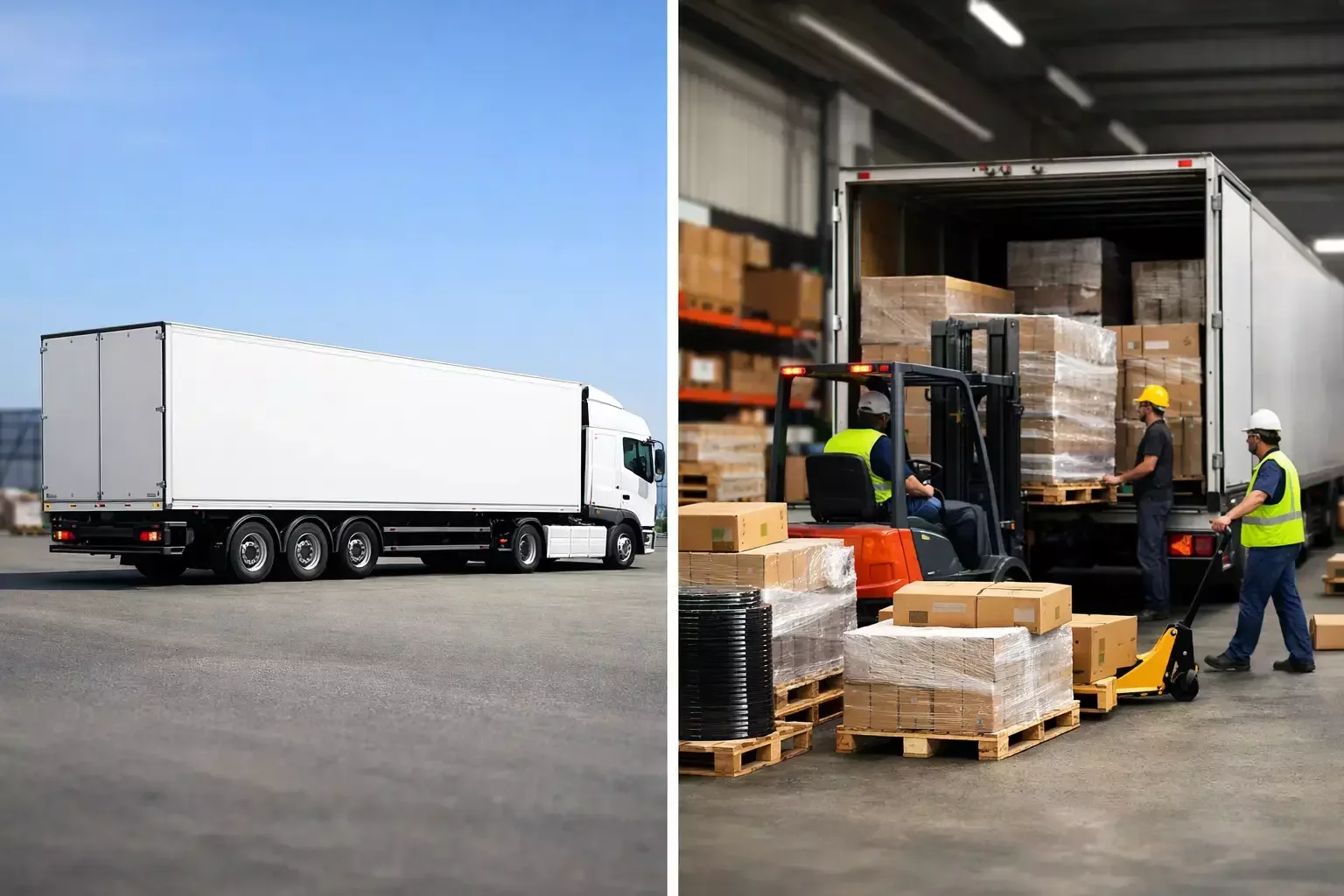
Dedicated transport vs groupage is a commercial decision, not simply a transport choice
A late production release in the Midlands, a booked delivery slot in Belgium and a customer waiting on stock that cannot afford to sit overnight in a consolidation hub quickly turns transport purchasing into an operational decision.
At that point, choosing between dedicated transport and groupage is no longer simply about obtaining the lowest freight rate. It becomes a question of risk, control and whether the transport model matches the commercial importance of the shipment.
Both services play an important role in European road freight.
Neither is universally better than the other.
The right solution depends on the characteristics of the freight, the consequences of delay and the level of control required throughout the movement.
For manufacturers, distributors, procurement teams and freight forwarders, understanding those differences leads to better transport decisions and fewer avoidable service failures.
What changes between dedicated transport and groupage?
Although both services move freight from collection to delivery, they operate in fundamentally different ways.
Dedicated transport allocates a vehicle exclusively to one shipment, or one customer's movement, travelling according to an agreed transport plan.
Groupage combines freight from multiple customers into one transport network, sharing vehicle capacity and operating costs across several consignments.
The distinction may appear straightforward, but it changes almost every aspect of the movement.
How dedicated transport works
With dedicated transport, the vehicle is allocated specifically to your shipment.
Whether that is a dedicated van carrying urgent engineering components or a full articulated lorry transporting industrial equipment, the movement is planned around your requirements.
Collection, routing and delivery remain focused on one consignment, giving greater control over timing, communication and handling.
Our guide to Dedicated European Transport explains how this approach reduces unnecessary variables throughout the journey.
How groupage works
Groupage follows a different operating model.
Multiple consignments are consolidated to maximise vehicle utilisation before travelling through a planned transport network.
Depending on the route, freight may pass through one or more depots where it is sorted alongside other shipments before continuing towards its destination.
This model provides excellent efficiency for many routine commercial shipments.
The trade-off is that the shipment becomes part of a wider network rather than remaining the sole focus of the transport plan.
When dedicated transport is the right choice
Dedicated transport is generally selected when maintaining operational control is more valuable than minimising transport cost.
Typical examples include:
- Time-critical production components
- High-value commercial goods
- Sensitive engineering equipment
- Medical devices
- Prototype parts
- Exhibition freight
- Fixed delivery appointments
- Manufacturing shutdown support
- Replacement machinery
These shipments often benefit from:
- Direct routing
- Reduced handling
- Faster collection
- Clearer communication
- Improved shipment visibility
- Greater delivery certainty
For businesses moving time-critical freight across Europe, these advantages often outweigh the higher transport cost.
Dedicated transport also becomes increasingly valuable where handling itself creates risk.
Businesses transporting fragile freight across Europe frequently choose dedicated vehicles because reducing handling remains one of the most effective ways of preventing damage.
When groupage makes commercial sense
Groupage remains an excellent transport solution for many commercial movements.
Groupage often provides excellent value where freight is:
- Well packaged
- Flexible on delivery timing
- Not particularly sensitive to handling
- Suitable for shared transport networks
Because transport costs are shared across multiple consignments, the cost per shipment is usually lower than allocating an entire vehicle.
Many routine replenishment deliveries, standard manufacturing products and commercial stock movements travel successfully through groupage networks every day.
The key is matching the service to the shipment rather than expecting network transport to deliver dedicated levels of control.
Cost is more than the transport invoice
Transport buyers naturally compare quotations.
However, the cheapest transport option is not always the lowest commercial cost.
A delayed delivery may result in:
- Production downtime
- Missed installation dates
- Customer dissatisfaction
- Additional transport costs
- Emergency replacement shipments
- Internal administration
- Lost revenue
Viewed in that context, the apparent saving achieved through a lower freight rate can disappear very quickly.
Dedicated transport generally costs more because the vehicle is reserved exclusively for one movement.
In return, the shipper buys greater control, fewer handling points and improved operational certainty.
For commercially sensitive freight, those benefits frequently justify the additional investment.
Transit time and delivery certainty
One of the biggest operational differences between dedicated transport and groupage is how transit time is managed.
Dedicated transport normally collects and travels directly to the delivery point, subject only to driver hours regulations, ferry or Channel Tunnel schedules, customs procedures and agreed routing.
The journey is built around the shipment.
Groupage is different.
Freight normally waits for consolidation before departing, may travel through one or more distribution hubs and follows network schedules designed to optimise multiple deliveries rather than a single consignment.
This does not make groupage unreliable.
It simply means that delivery certainty is influenced by several operational factors beyond the individual shipment.
Where unloading appointments are fixed, production schedules are tightly planned or customer commitments cannot move, dedicated transport generally offers greater confidence.
Handling risk and load integrity
Every additional handling event introduces another opportunity for delay or damage.
Groupage networks rely on efficient loading, unloading, sorting and consolidation to achieve commercial efficiency.
For many shipments, this presents no difficulty.
However, some freight benefits significantly from remaining on the same vehicle throughout the journey.
Examples include:
- Precision engineering equipment
- Specialist electronics
- Scientific instruments
- High-value stock
- Aerospace components
- Prototype machinery
Direct vehicle allocation helps preserve load integrity because the shipment is not repeatedly transferred between vehicles or depots.
It also creates a clearer chain of custody, improving accountability throughout the movement.
Dedicated transport vs groupage for UK–Europe freight
The differences become even more significant when freight crosses international borders.
Post-Brexit transport requires customs documentation, commercial invoices and border processes to align with the transport plan.
Dedicated movements allow transport planners to coordinate documentation, vehicle allocation and departure timing around one shipment.
Businesses planning customs-ready European transport often find that this additional control reduces border delays and improves communication throughout the movement.
Groupage movements remain perfectly viable for cross-border freight, but they inevitably involve more operational dependencies because multiple consignments share the same transport network.
For businesses making firm delivery commitments to customers, dedicated transport often provides greater confidence when border timing is critical.
How to choose the right transport model
Rather than asking which service is better, businesses should ask which service best matches the operational profile of the shipment.
Useful questions include:
- How urgent is the delivery?
- What is the commercial cost of delay?
- How much handling can the freight tolerate?
- Is the delivery appointment fixed?
- Are customs formalities involved?
- How important is shipment visibility?
- Would additional handling create unnecessary risk?
If flexibility, cost efficiency and shared delivery windows are acceptable, groupage is often the right answer.
If certainty, reduced handling and operational control are essential, dedicated transport will usually provide the stronger commercial solution.
Experienced freight providers assess these factors before recommending a service, ensuring the transport model reflects the shipment rather than forcing every movement into the same operational template.
Conclusion
Dedicated transport and groupage are not competing services.
They solve different commercial problems.
Groupage delivers excellent value where flexibility exists and shared network operations suit the characteristics of the freight.
Dedicated transport delivers greater control where timing, handling, communication and delivery certainty are commercially important.
The strongest transport decisions are rarely based on freight rates alone.
They are based on understanding the operational consequences of success—and the commercial consequences of failure.
When the transport model matches the priorities of the shipment, businesses gain more than an efficient delivery.
They gain confidence that the movement will perform exactly as planned.
Not sure whether dedicated transport or groupage is right for your shipment?
Our experienced European transport team will assess your freight, delivery requirements and commercial priorities before recommending the most appropriate solution. Whether you need dedicated road freight or a cost-effective shared movement, we'll help you choose the service that best protects your shipment.