

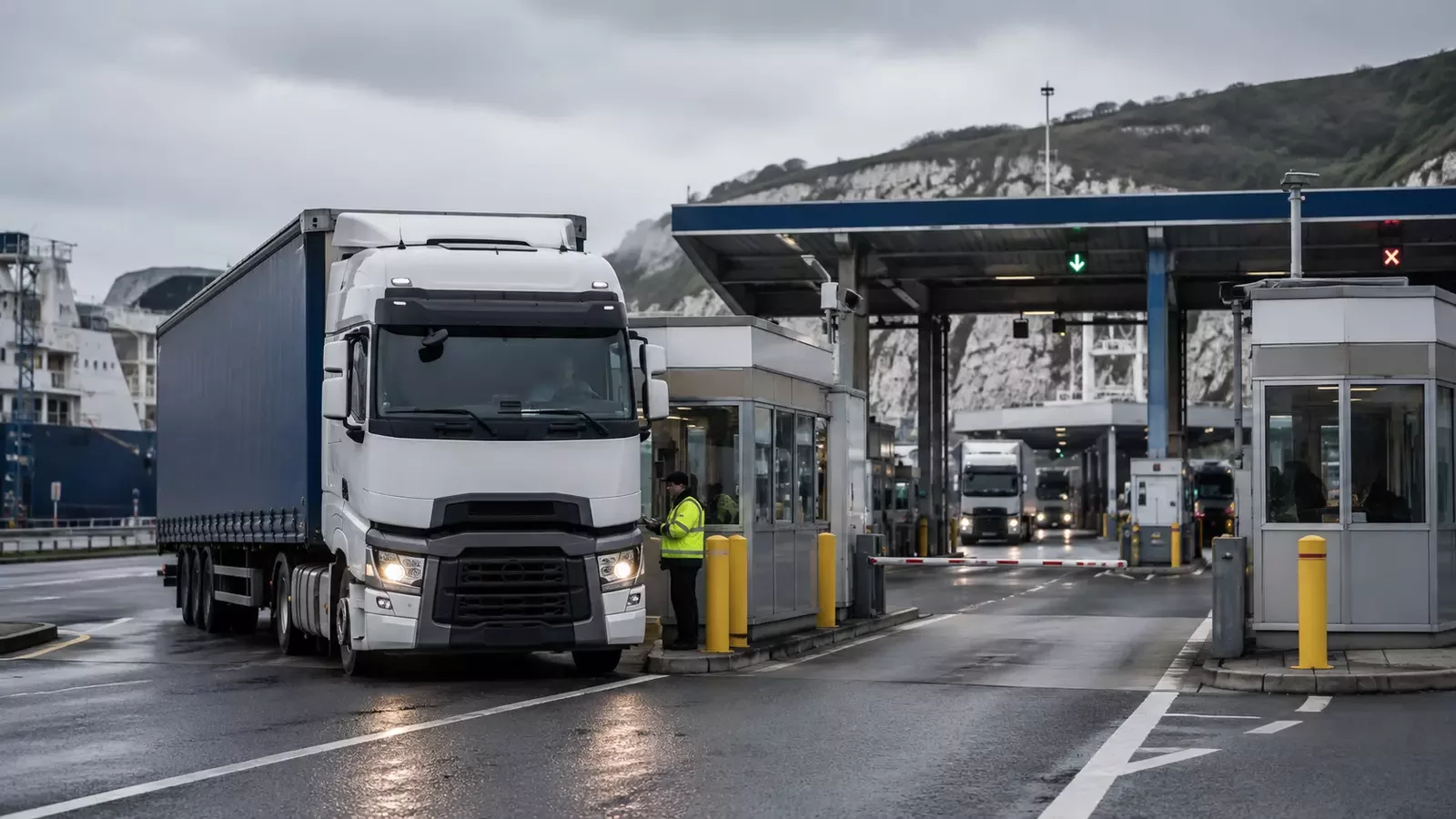
Cross-border freight delays begin long before the vehicle reaches the border
A vehicle can leave the loading bay on time, follow the planned route perfectly and still lose hours at the border because one customs reference is missing, one commodity code is incorrect or one document does not match the shipment.
That is the reality of cross-border freight delays.
For manufacturers, distributors and freight forwarders, delays are rarely caused by the road journey alone. They usually develop because customs preparation, transport planning, communication and delivery coordination have not remained aligned throughout the movement.
The commercial consequences vary from shipment to shipment.
A routine stock replenishment arriving several hours late may create only minor disruption.
A delayed production component, urgent engineering part or installation delivery can stop manufacturing, postpone projects and affect customer commitments across the wider supply chain.
Preventing delays therefore begins with planning the movement correctly rather than simply booking the fastest available vehicle.
Why cross-border freight delays happen
Most delays occur because of process failures rather than distance.
The physical mileage between collection and delivery is often less important than the number of decision points, handling stages and administrative processes that sit between them.
Once freight moves between the UK and mainland Europe, relatively small weaknesses can quickly develop into significant operational problems.
Customs documentation and border readiness
Customs preparation remains one of the biggest causes of cross-border delay.
Commercial invoices, commodity codes, customs values, Incoterms, importer details and supporting documentation all need to align before the shipment reaches the border.
If even one element is incomplete or inconsistent, customs authorities may require clarification before allowing the vehicle to continue.
Businesses that invest in customs-ready European transport significantly reduce the likelihood of avoidable delays because documentation is verified before departure rather than corrected during transit.
Shared transport networks
Transport models also influence delay risk.
Shared groupage services remain highly effective for many commercial shipments, but they naturally introduce additional handling points, depot transfers and consolidation stages.
Every additional touchpoint creates another opportunity for freight to wait, paperwork to become separated from the shipment or operational delays to develop.
Businesses comparing dedicated transport and groupage should consider these operational differences alongside transport cost.
Poor communication
International freight frequently involves multiple organisations.
The shipper, consignee, customs broker, transport provider and freight forwarder may all contribute information throughout the movement.
When communication becomes fragmented, relatively minor issues can escalate quickly.
A customs query left unanswered for an hour may become a missed crossing.
A delayed collection notification may result in a missed delivery booking.
The longer information takes to move, the greater the operational impact.
The biggest pressure points in UK–Europe road freight
Although every shipment is different, several recurring pressure points appear throughout cross-border transport.
These include:
- Customs documentation errors
- Incorrect commodity information
- Missing shipment references
- Consolidation delays
- Depot transfers
- Border congestion
- Driver hours regulations
- Port disruption
- Delivery booking restrictions
- Limited shipment visibility
None of these risks automatically lead to service failure.
However, the more variables involved in the movement, the greater the opportunity for disruption.
Reducing unnecessary complexity is often one of the most effective ways of improving delivery performance.
How to reduce cross-border freight delays
Completely eliminating delays is unrealistic.
Reducing avoidable delays is achievable.
Plan the shipment before booking transport
Successful cross-border movements begin with accurate shipment qualification.
Before transport is booked, businesses should confirm:
- Commodity information
- Invoice details
- Collection readiness
- Delivery requirements
- Customs responsibilities
- Importer and exporter details
- Package quantities
- Shipment weights
Planning these details before collection prevents many problems from developing later.
Match the transport model to the freight
Not every shipment requires the same transport solution.
Routine commercial freight with flexible delivery windows may move perfectly well through shared networks.
Urgent, fragile or commercially critical shipments often benefit from Dedicated European Transport, where one vehicle remains allocated to one movement throughout the journey.
Selecting the correct operating model frequently has a greater influence on delivery reliability than attempting to reduce transit time alone.
Build realistic transit plans
Effective transport planning means preparing for known operational constraints.
Driver hours, ferry or Channel Tunnel schedules, customs formalities, border inspections and delivery appointments all influence realistic transit times.
Experienced operators build these factors into the transport plan rather than relying upon ideal conditions.
Keep communication proactive
Good communication is one of the strongest tools available for reducing operational disruption.
Customers should receive meaningful updates rather than generic tracking notifications.
Knowing that customs clearance has been completed, the vehicle has crossed the border or a revised ETA has been agreed allows production teams, receiving sites and procurement departments to respond before delays become larger problems.
When dedicated transport is the right choice
Dedicated transport is not appropriate for every shipment.
However, it becomes increasingly valuable where delays carry significant commercial consequences.
Typical examples include:
- Production line deliveries
- Engineering breakdown support
- Medical equipment
- High-value goods
- Fragile commercial freight
- Exhibition freight
- Fixed installation appointments
- Manufacturing shutdown projects
Because the vehicle remains dedicated throughout the movement, transport planners retain greater control over routing, communication and delivery timing.
Businesses moving time-critical freight across Europe often choose dedicated transport because reducing operational dependencies improves delivery certainty.
Dedicated movements also support reduced handling freight transport, helping minimise damage risk while simplifying communication throughout the journey.
Good delay management is built around control
Strong transport providers understand that delays cannot always be prevented.
Border inspections, severe weather, traffic disruption and port congestion remain part of international logistics.
The difference lies in how those events are managed.
Effective delay management begins before collection.
Shipment information is verified.
Documentation is checked.
The appropriate vehicle is selected.
Delivery commitments are confirmed.
During transit, communication remains proactive and exceptions are identified early enough for corrective action to remain possible.
That operational discipline frequently determines whether a delay remains a manageable inconvenience or develops into a costly supply chain failure.
Conclusion
Cross-border freight delays are rarely caused by one dramatic event.
They usually result from a series of small weaknesses that accumulate throughout the transport process;
Incomplete documentation.
Poor communication.
Unnecessary handling.
Weak planning.
Shared operational dependencies.
Each increases the likelihood that a shipment will lose valuable time before reaching its destination.
For businesses moving freight between the UK and mainland Europe, the objective should not simply be moving goods quickly.
It should be moving them predictably.
When transport planning, customs preparation, communication and vehicle selection work together, the border becomes another managed stage of the journey rather than the point where control begins to disappear.
That is how reliable international road freight is delivered.
Need more reliable UK–Europe road freight?
Our experienced European transport team provides dedicated road freight, customs-ready planning and proactive shipment management to help businesses reduce border delays and keep commercial freight moving.